

The By-Election That Could End Keir Starmer’s Time as Prime Minister
On Thursday, the voters of Makerfield could define not just Andy Burnham’s political career but the future of British politics itself, reports Zeteo UK’s new political editor Shehab Khan.

A note from our Editor-in-Chief:
Thank you for subscribing to Zeteo UK. We are still in soft-launch mode till September as we finish recruiting our team, but given the craziness of the British news cycle right now, we will be publishing stories and op-eds on a semi-regular basis between now and then. Please do become a paid subscriber today so you can read and watch all of our Zeteo UK original content without hitting a paywall – and also so you can help fund independent journalism in the UK. For now, please do enjoy this debut piece from our brilliant new political editor, Shehab Khan, without a paywall.
- Mehdi
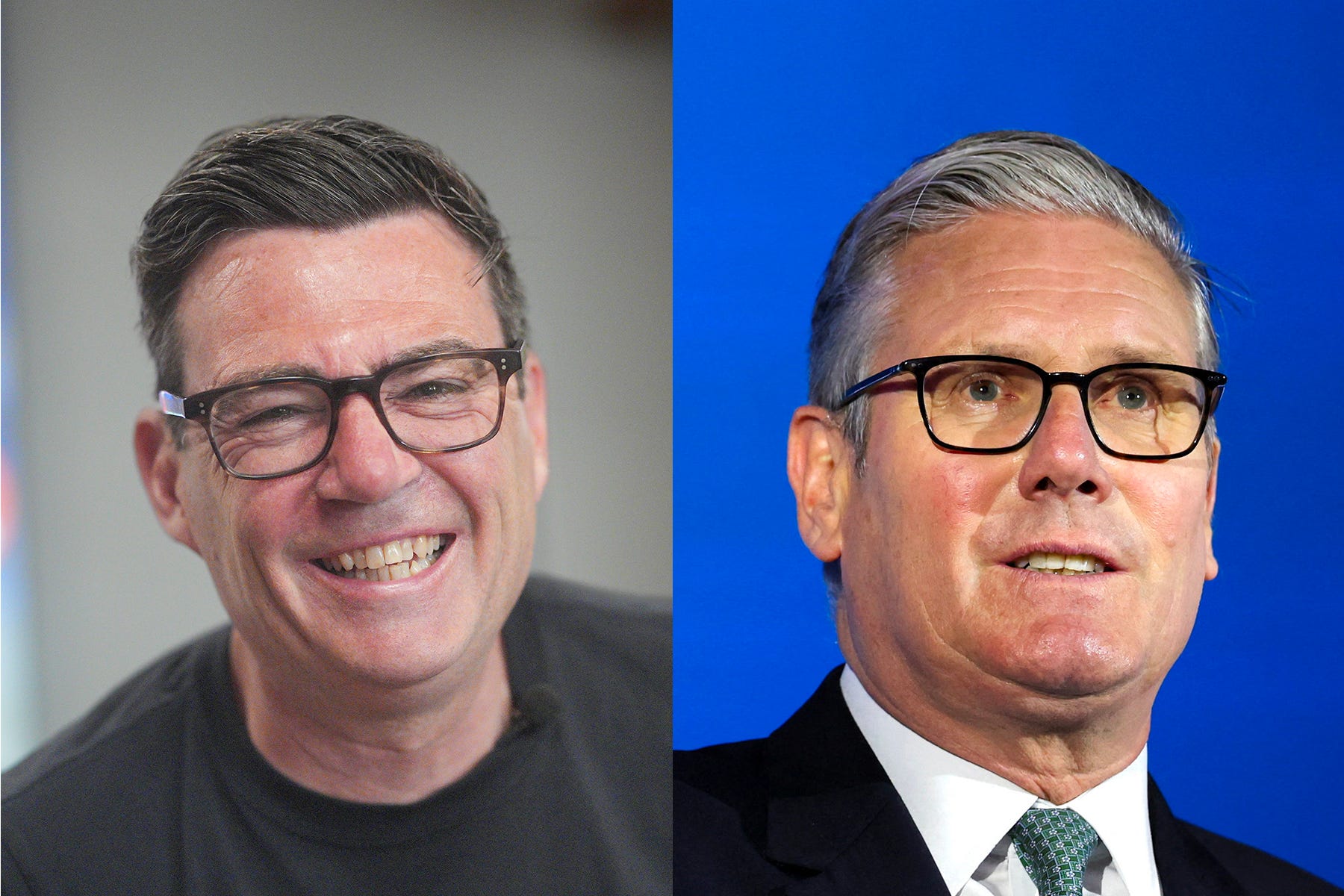
Aged just 15, in a commuter-belt village in Cheshire, Andy Burnham watched a BBC drama, ‘Boys from the Blackstuff’, about men signing on in Liverpool and decided politics and the Labour Party were for him. That moment changed his life, putting him on a course that would thrust him to the forefront of British politics. Now, more than 40 years later, the boy from up north is being asked by some in that same party to come down south and save it.
On Thursday, the voters of Makerfield will decide whether to return Burnham to Westminster – a result that will almost certainly determine the prime minister’s fate. If he is successful, the expectation is that before long Burnham, the most popular Labour politician by a long way, will either make a move to challenge Keir Starmer or his allies will force the prime minister to step aside for him. As one Labour MP put it to me a few weeks ago, “[W]e will carry Andy on our shoulders all the way to Number 10.”
Keir Starmer is at the G7 summit meeting with world leaders, and no one in the room knows whether they are shaking hands with the now-and-future prime minister or a caretaker with days left on the clock. The future of British power, this week, does not reside in the summit room – it resides in a by-election in Wigan.
It should however be made clear there is no guarantee that Burnham will win that by-election. A former minister told me this weekend they believe “it is tighter than we think” – that shy Reform voters could yet emerge, and that if Nigel Farage’s party can pull more of the Restore vote across to it, Thursday will be close. Reform came second here in 2024 and swept the board in May’s local elections; Makerfield is not a Labour fortress.
“This is not going to be a walk in the park,” the former minister told me.
Yet even a Burnham defeat would not settle Labour’s leadership question. It would undoubtedly strengthen the hand of other hopefuls – not least Wes Streeting and Angela Rayner – but among Labour MPs, the debate has already moved beyond whether a succession will happen to who will lead it, with the argument centring not on whether Starmer can survive but about who will replace him.
Makerfield may decide the protagonist, but to understand why Labour is reaching for Burnham, you have to understand what he has built. He started his career in journalism writing for trade magazines before working for then-Labour MP Tessa Jowell. He was an MP at 31, a junior minister under Tony Blair and in the cabinet under Gordon Brown by his late thirties. He ran for the Labour leadership twice and lost twice – fourth when Ed Miliband won in 2010 and second to Jeremy Corbyn in 2015, before going on to take up a role in Corbyn’s shadow cabinet.
It has given rise to a joke that has been doing the rounds in Labour circles in recent years: “A Blairite, a Brownite, a Milibandite, and a Corbynite walk into a pub. ‘Hello, Mr Burnham,’ says the barman.” Burnham is well aware of it. Indeed, he says he can laugh about it.
Asked about the gag by The Guardian, he replied: “It says more about the people who tell that joke than me, because it says they are factional.” Burnham’s argument is that what critics see as ideological flexibility is in fact loyalty – he served the leaders the party chose and now presents himself as a figure capable of bridging Labour’s divides in Westminster and beyond.
In 2017, in a move that now looks like genius but at the time looked like self-imposed exile, he left Westminster to become the first mayor of Greater Manchester, winning with more than 60% of the vote. He was re-elected twice by landslides, and his popularity has surged. He brought the buses back under public control – the yellow Bee Network is now as much a part of Manchester as the music he loves – and capped fares at £2. During the pandemic, he turned a row with a Conservative government into a battle where he emerged as “King of the North“. He is the only politician in Britain of any stripe with a net-positive favourability rating.
It is his performance as the mayor of Greater Manchester that is the central case for Burnham, and it is a real one. It is why a current loyal Starmerite minister, whom I spoke to, was generous about him even while urging caution. Burnham is “a great colleague”, they said, but the party’s energy after this by-election belongs to the upcoming Greater Manchester mayoral contest he would trigger by leaving, not in a war on its own leader. “It wouldn’t be wise to start infighting instead of the bigger challenge.”
The sharper edge came in a question. “What has he done on a national level?” the minister asked. The advice: Win Labour the mayoralty race that you’ve started, get into the cabinet, and “show everyone what you can do”.
Burnham has been a metro mayor for nine years – a serious job, but one mercifully sheltered from decisions about national debt and taxation, the defence budget and the geopolitics of a darkening world. The blank canvas that makes him appealing – unattached to any of the government’s failures – is also what raises concerns among some colleagues that he remains largely untested on the biggest questions facing the country. Yet as his potential return to Westminster draws closer, we are beginning to see where Burnham stands.
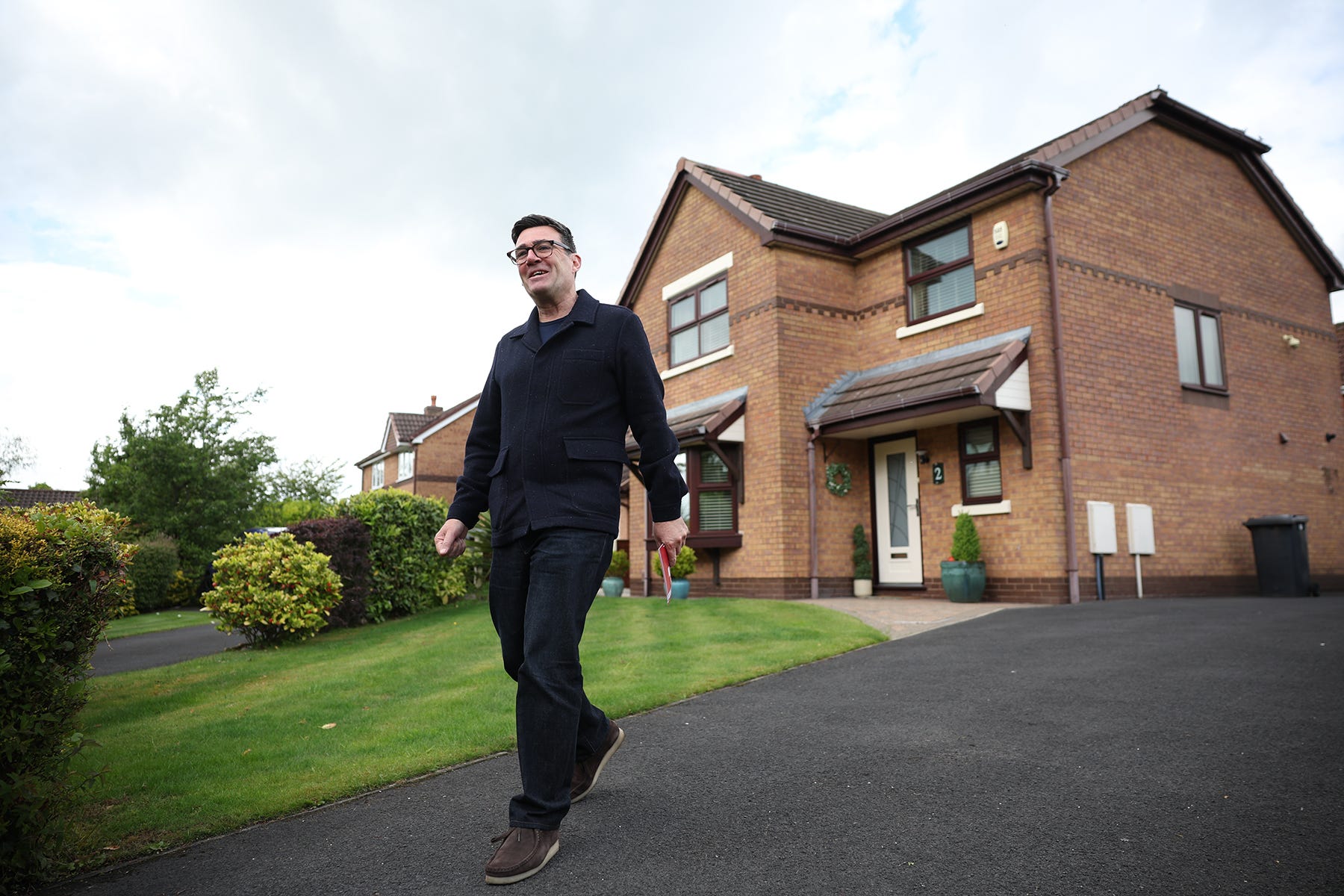
He has pledged to maintain the state pension triple lock, sticking to Labour’s manifesto commitment. On defence, meanwhile, he has argued that welfare spending should be reduced to help fund a larger military budget. The position places him closer to those in Labour who believe defence spending must rise more quickly than Starmer’s government currently intends.
On Gaza, polling by Opinium suggests the issue remains politically potent, with half of former Labour voters now backing other centre or left-wing parties saying this government’s pro-Israel position influenced their decision to ditch the party. Burnham, for his part, was among the first senior Labour figures, alongside Sadiq Khan, to call for a ceasefire in October 2023. Yet he has stopped short of describing Israel’s actions as genocide, telling The Guardian: “I do have concerns about the disproportionate nature of what has happened in terms of the destruction, and there has to be a full process of investigation and accountability.”
In recent weeks, as his national policy positions have come under greater scrutiny, Burnham has shifted on some major issues. On the WASPI dispute – which centres on millions of women born in the 1950s who say they were not properly informed about increases to the state pension age and should therefore receive compensation – Burnham appeared to back their calls before rowing back amid concerns about the cost.
On immigration, his position has also shifted. He dropped his support for migrants being given immediate access to benefits, leaving even some sympathetic colleagues telling me his plans are “half-formed”.
Assuming he does win the by-election – and the latest Opinium poll has him five points clear – several routes open before him. He could bide his time, remain on the green benches as a constant reminder of the prime minister’s troubles – a thorn in the side of the government – waiting for Starmer to conclude that his position is no longer tenable.
Another possibility is that senior cabinet ministers decide the prime minister’s time is up and press him to announce an orderly handover. That could be through private meetings, in the media or by sending the aggressive message by resigning. Starmer may choose to step away at that point or fight a leadership race but in either of those circumstances, a rival candidate may step forward to prevent a coronation – and all eyes would be on Wes Streeting in that scenario.
The third option is for Burnham or someone else to fire the starting gun himself and force a leadership contest. Everyone I speak to in Westminster believes Burnham would have little difficulty securing the backing of the 81 MPs required to trigger one.
A resulting leadership race could be messy, could take some time and open Labour up to criticism from opponents that they are putting their internal party politics over the country and because of that not everyone in Labour believes such a contest is desirable. Some within the party believe a swift, uncontested handover would be preferable. “Starmer can’t go on and a lengthy leadership race is not good for the party or the country. Getting Andy in quickly is better for everyone. It will happen anyway,” a pro-Burnham former minister told me.
But it is the potential leadership race that contains the real drama, because Starmer has so far said he will fight one. The question – and it is the question his own colleagues are asking – is whether he means it or whether he simply has to say it to maintain a shred of authority. One MP was blunt with me: In a head-to-head, the prime minister “would be humiliated”.
Whether Starmer agrees is another matter. Unlike any other candidate, Starmer does not need MPs to nominate him; he is automatically on the ballot. But even if he chooses not to run, the former health secretary Streeting has made it clear he has no intention of waving Burnham through; there will be no coronation if the former health secretary can help it, and he would put his own name forward.
The case that will be made in that leadership race by team Burnham, if he wins the by-election, is that he has just defeated Reform in a seat that is one of their most prominent targets. Luke Charters, until recently a parliamentary private secretary and widely regarded as a Starmer-era high-flyer, told me that if Burnham manages it, he will have proved himself “a blueprint for defeating Farage right across the country”. That is the key thing that Labour MPs are most worried about. They believe Reform and Nigel Farage are their biggest threat, and so far have seen little evidence that Starmer – or anyone else – has a convincing plan to beat them.
If Burnham wins in Makerfield, Charters tells me, it will provide the evidence many Labour MPs are craving – and ultimately become his mandate. “The era of timidity and incrementalism has to have had its day. Andy can deliver a bold, decisive, progressive policy programme, and that is exactly how we can defeat hard-right populist forces,” he adds.
But it is a different former minister who put their finger on what could ultimately be the long-term worry for Team Burnham. Referring to 2017, “Andy left when we needed him most, now after we’ve spent years rebuilding the party, he wants to come back and swoon in.” They added that Starmer had won a leadership election, won a landslide, held a democratic mandate and had still been stripped of his authority. If Burnham takes the crown untested, then the first hard decision he makes that Labour MPs don’t like may leave him with no authority at all. “I can totally imagine colleagues saying ‘you have no right to say a thing’,” they told me.
Their real argument therefore was not against Burnham but against a coronation. “We need a contest,” they said. “We need to test whoever wants to be PM.”
For now, everything depends on what happens in Makerfield on Thursday. If Burnham wins, Labour’s leadership question will no longer be a Westminster parlour game – it will become the defining question of British politics.
Check out more from Zeteo UK:


